Voices from Liju / Interview 09 of 15
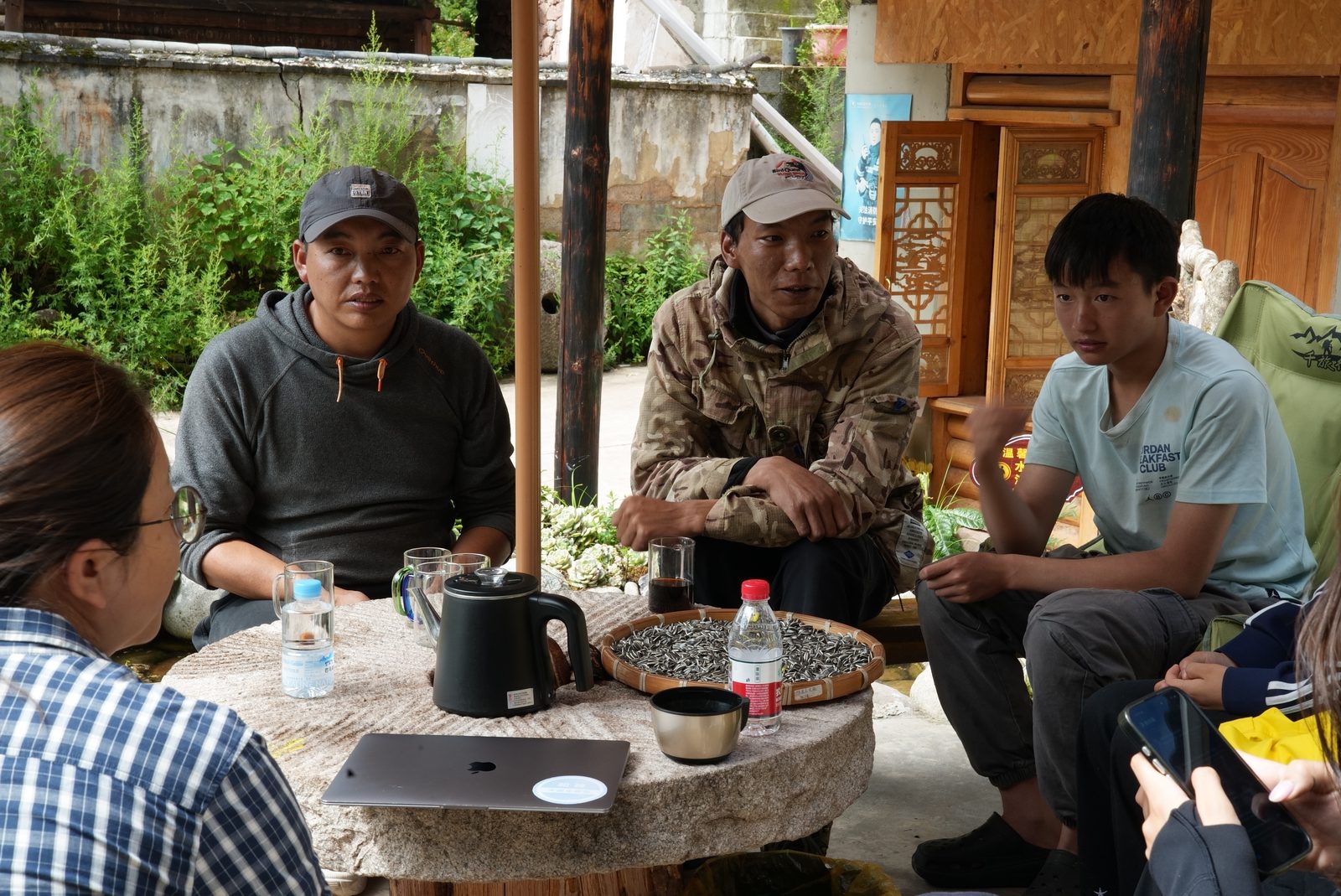
Han · Staff Member, Lijiang Laojun Mountain Yunnan Snub-nosed Monkey Nature Center · Sanchahe, Liju Village · Laojun Mountains, Yunnan
“White kidney beans require large numbers of bamboo poles for trellising, affecting bamboo forests that are an important food source for Yunnan snub-nosed monkeys.”
At the Laojun Mountain conservation station, Ms. Wang is a female ecological practitioner working at the intersection of scientific conservation and local community life.
With professional training in biodiversity conservation, she chose to bring ecological knowledge into everyday field practice in northwestern Yunnan. Her work includes camera-trap monitoring, field patrols, and bird transect surveys. Tracks, scat, feeding traces, and other small signs become evidence through which she observes changes in the forest ecosystem.
For Ms. Wang, conservation does not mean simply separating people from nature. Local residents have lived in these mountains for generations and possess detailed knowledge of forests, plants, and animals; this local knowledge is indispensable to conservation. At the same time, livelihood practices can create ecological pressure. White kidney beans, for example, require large numbers of bamboo poles for trellising, which can affect bamboo forests important to Yunnan snub-nosed monkeys. The conservation station has therefore explored changes in cultivation methods that might connect community benefit with ecological protection.
She also opposes tourism based on feeding Yunnan snub-nosed monkeys. In her view, genuine protection should not reshape wild animals to satisfy visitors, but should respect their existing ways of life.
“Conservation is not about possessing nature. It is about finding ways for people and forests to coexist within a complicated reality.”
For her, conservation is not about possessing nature. It is about finding ways for people and forests to coexist within a complicated reality.