ART & PUBLIC HUMANITIES, WORKS IN PUBLIC FORM
A seed can be recorded by species, altitude, germination rate, and survival. A landscape can be mapped through biodiversity and ecological pressure. Yet neither vocabulary fully captures what it means to be removed from a place, classified by someone else, or asked whether survival is the same as belonging.
My work in conservation began with plants, but scientific description was never enough to contain what I encountered around them. Art became another way of thinking through these questions.
Across artist books, installation, paper cutting, photography, and participatory work, I use plants not simply as subjects to represent, but as a way of unsettling familiar categories: native and introduced, specimen and living being, preservation and change, survival and home.
The works move between the mountains of Yunnan and an institutional corridor in Beijing, between botanical protocols and handmade paper, and between things that are carefully protected and things that survive without permission.
These works do not illustrate the research after it is finished. They begin where research language becomes insufficient.
The exhibition lets the plants step out of the frame.
Against the Flat began with a failure of photography. After repeated expeditions between Beijing and Yunnan, our archive contained thousands of photographs: endangered alpine plants, birds, clothing, landscapes, and cultural objects. They were clear, beautiful, and strangely silent. Once framed, a rhododendron had no altitude, humidity, season, smell, or relationship to the people who knew where it grew.
That question also carried a historical weight. Botanical collecting has often depended on local guides, translators, and ecological knowledge while allowing those relationships to disappear from the archive. The history of plant exploration in northwest Yunnan made us ask what happens when a living landscape becomes a portable image, specimen, or name.
So we stopped trying to display the plants.
We let them leave the frame.
A field photograph isolates a plant from the relationships that made it visible: soil, season, altitude, weather, movement, and human knowledge.
Paper cutting deliberately removes botanical precision. The knife leaves rough edges; details disappear; interpretation becomes visible.
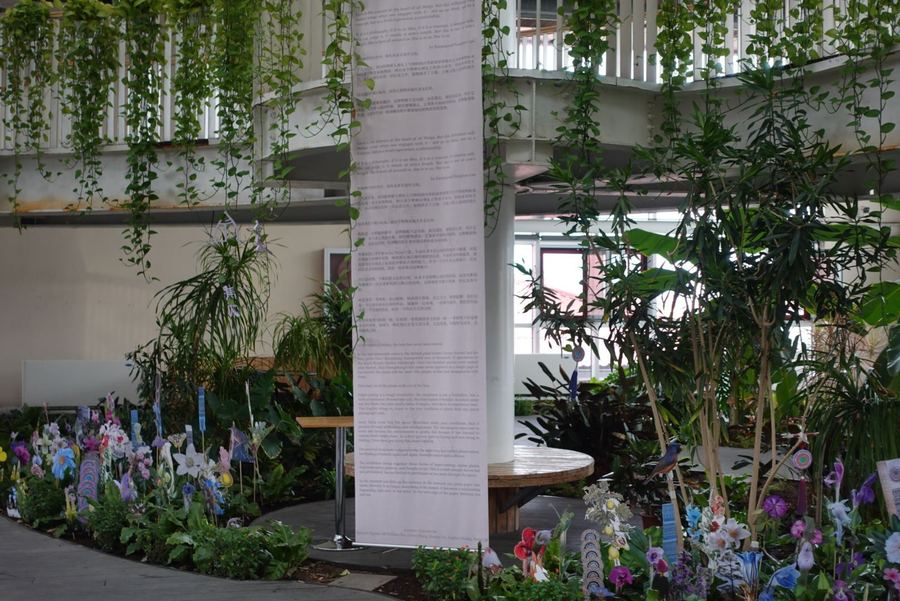
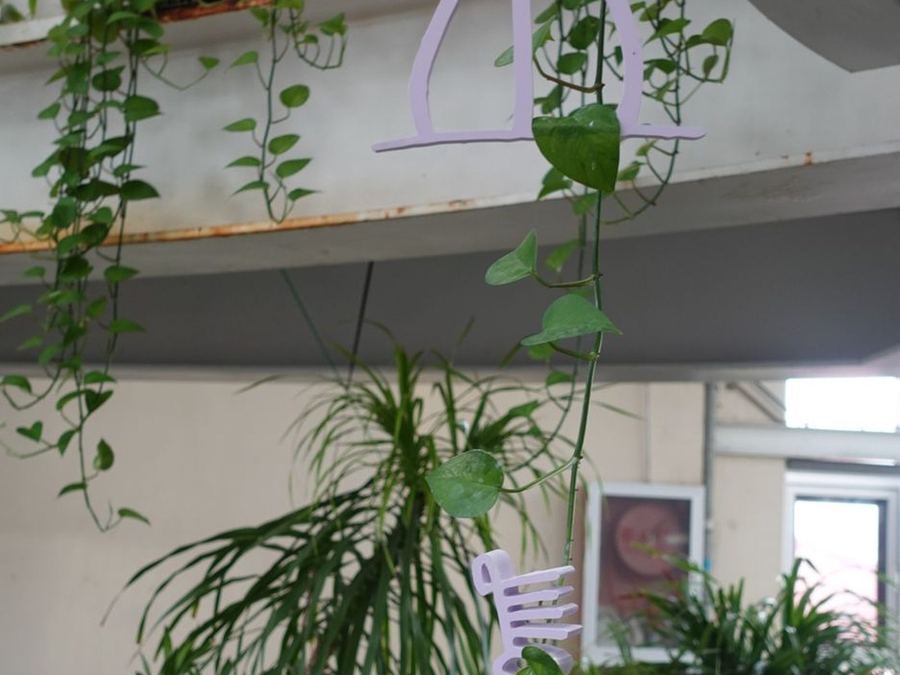
The cut forms were planted into the soil of the seventh-floor greenhouse. Wind moved them, moisture entered the fibers, colors faded, and the work accumulated traces of time.
The exhibition brought together three forms cut from paper: alpine plants, Naxi embroidery patterns, and Dongba characters, three forms of knowledge emerging from the same landscape but conventionally separated into nature, material culture, and language. Their fragility was intentional. Instead of preserving them behind glass, we allowed the works to change.
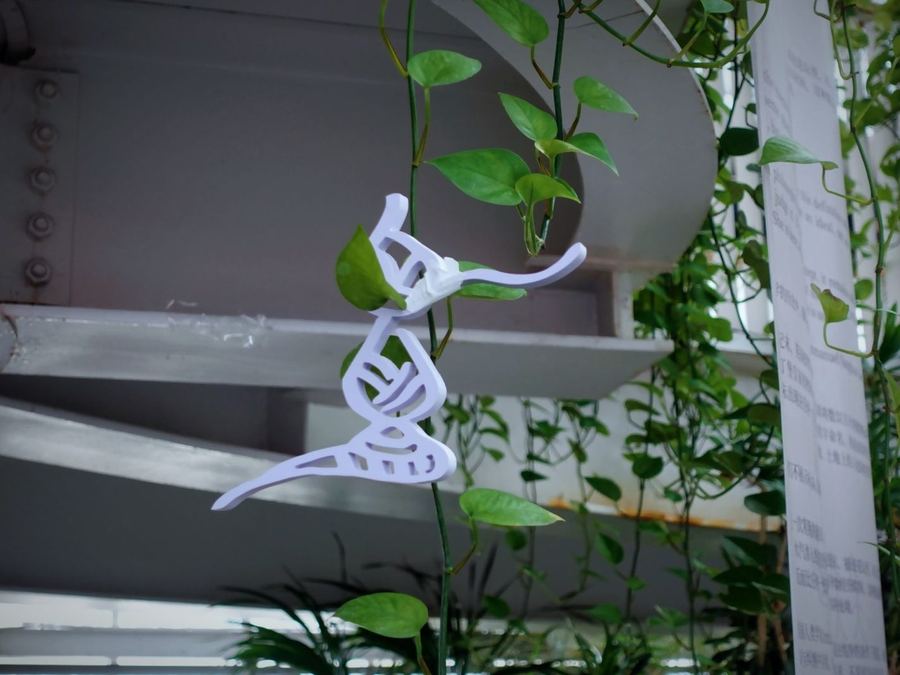
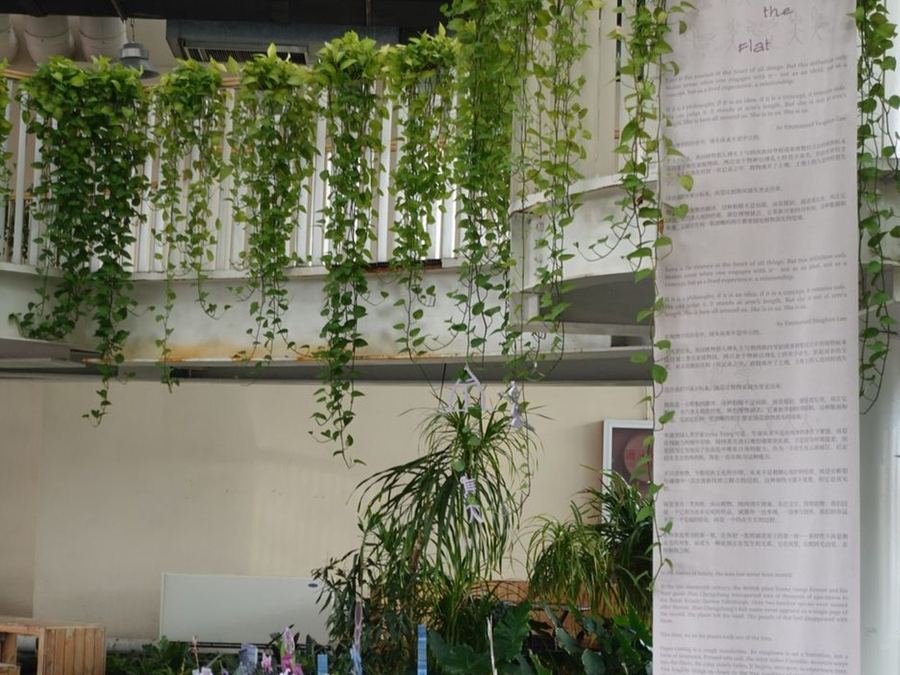
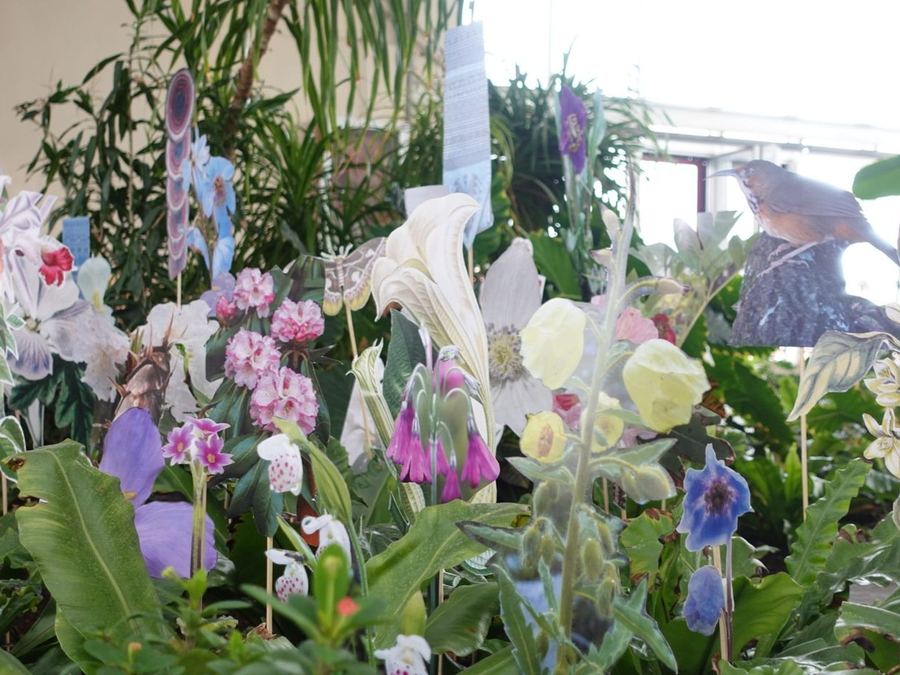
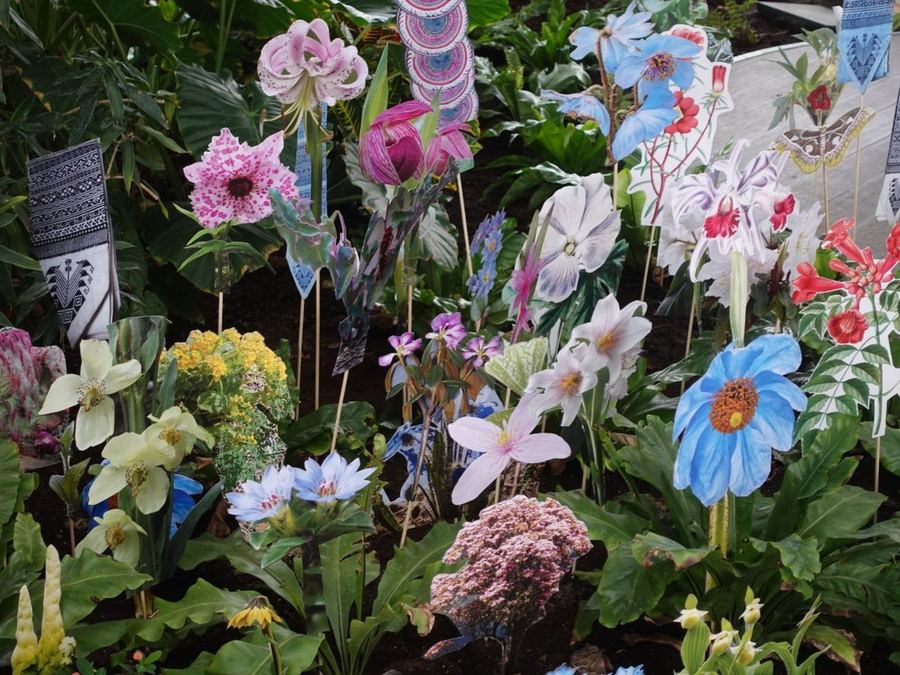
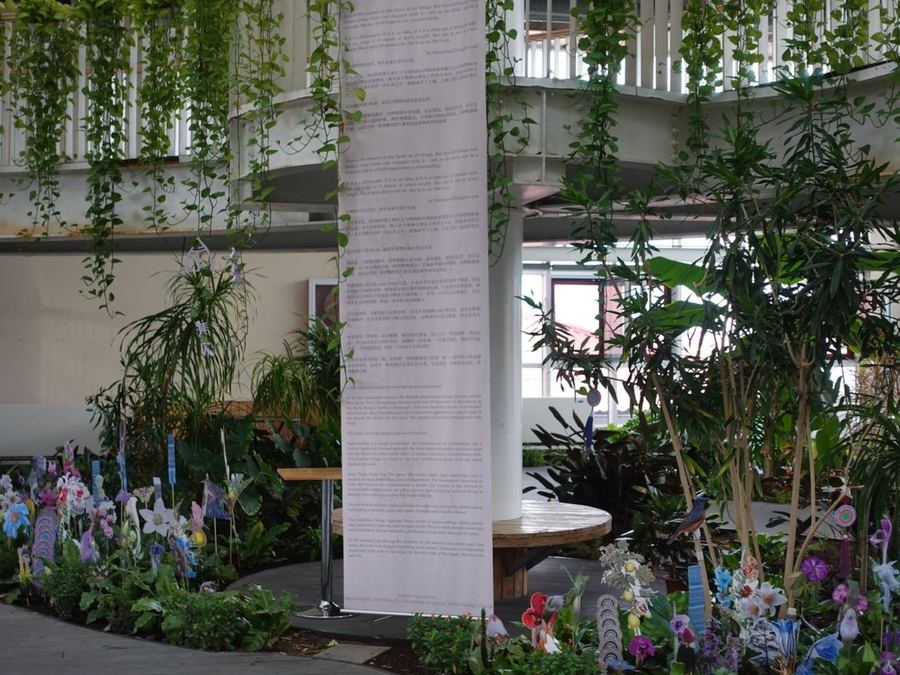
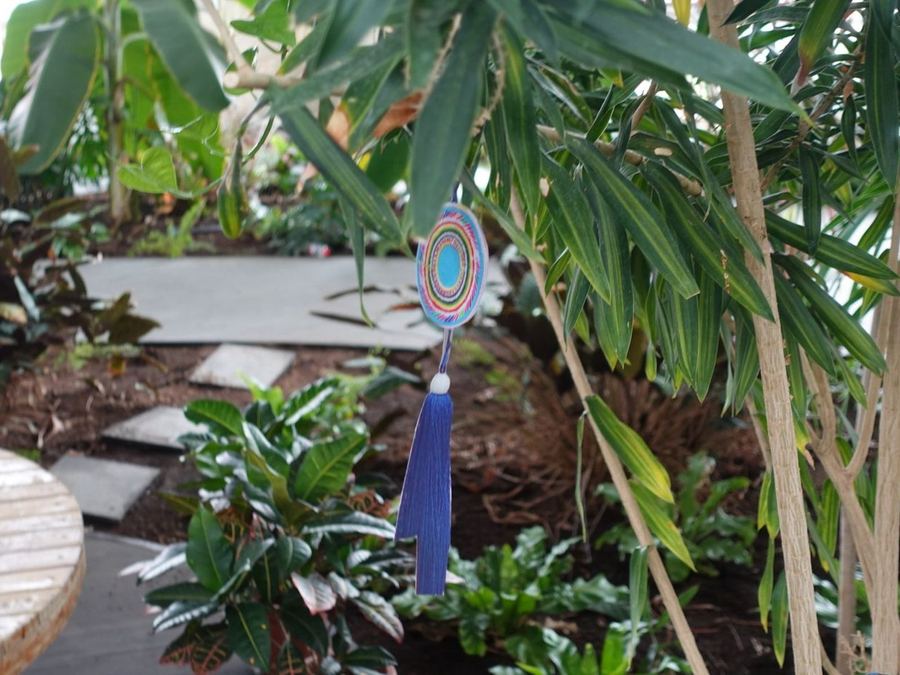
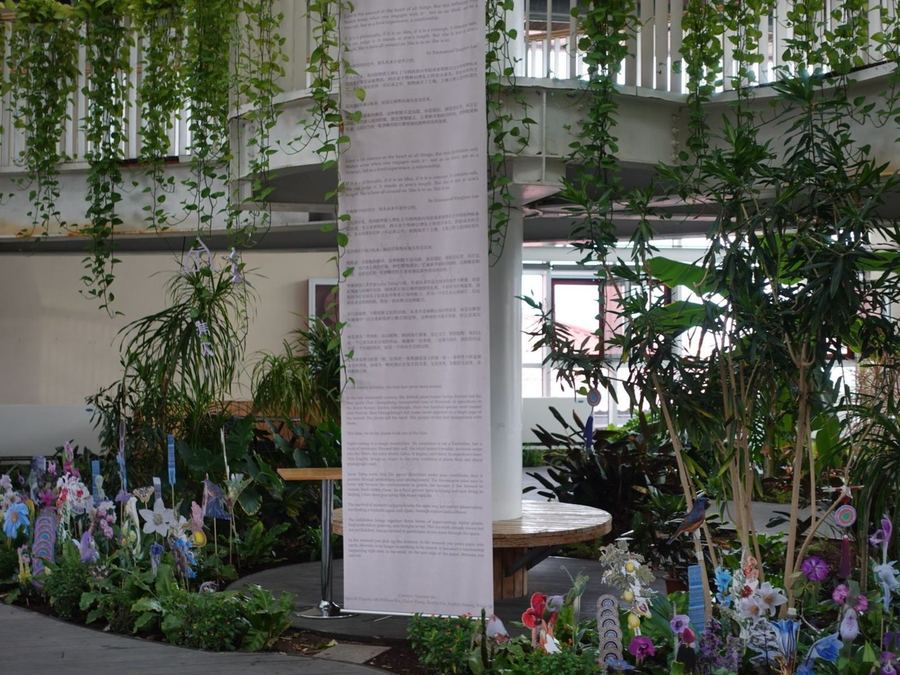
Against the Flat was deliberately exhibited before it was complete. Visitors were invited to cut their own forms and plant them into the installation. More than 30 participants contributed works, so the landscape changed throughout the exhibition.
What began as my attempt to translate field photographs became a collaborative project shaped by a five-student core curatorial team, teacher feedback, material failures, revisions, and audience participation. The work became less an object to be completed than a landscape that accumulated other people's decisions.
Flattening is both a physical act and a way of knowing. A specimen is pressed flat so it can travel. A photograph turns a habitat into an image. A minority culture can be preserved so carefully as “tradition” that its desire to change disappears. Against the Flat resists this impulse not by reconstructing an untouched past, but by allowing things to remain rough, changing, participatory, and unfinished.
During fieldwork, a Naxi grandmother told me: “Nobody doesn't want modernity.” That sentence changed how I understood preservation. Survival does not require remaining unchanged. A culture, or a plant, can persist precisely through adaptation, translation, damage, and reassembly.
What is lost when a living thing becomes a representation?